Glute Bridge Hold
Demonstration video

Recommended by our experts
Receive your personalized program
Stop training at random.
Get my program- Program tailored to your profile
- Guided progression
- Compatible with your equipment
- Structured plan
Our coach prepares your program
Get my programHow to do Glute Bridge Hold
Instructions
- Lie on your back on a yoga mat with knees bent and feet flat on the floor, hip-width apart.
- Place your arms at your sides, palms facing down.
- Engage your core and glutes, then lift your hips off the ground until your body forms a straight line from shoulders to knees.
- Hold this bridge position without letting your hips drop.
- Maintain tension in the glutes throughout the hold duration.
Technical Tips
- Do not overarch your lower back—keep your core engaged.
- Keep your knees aligned and avoid flaring them outward or inward.
- Focus on squeezing the glutes rather than pushing through the lower back.
Breathing Tips
- Inhale before lifting your hips.
- Exhale as you lift and hold the position.
- Breathe slowly and steadily throughout the hold.
Medical restrictions
- Acute lower back pain
- Lumbar disc herniation
- Post-surgical hip or pelvic recovery without medical clearance
Description
The Glute Bridge Hold is an isometric exercise designed to activate and strengthen the gluteal muscles, promote hip stability, and improve core engagement. Performed lying on the back with knees bent and hips elevated, this exercise emphasizes static muscular contraction, making it an ideal choice for improving endurance and neuromuscular control in the posterior chain. Suitable for all fitness levels, the Glute Bridge Hold is commonly used in rehabilitation settings, mobility training, and strength conditioning programs. It helps correct muscular imbalances caused by prolonged sitting and reinforces the foundational mechanics necessary for more advanced lower-body exercises such as squats and deadlifts. Its simplicity and low-impact nature make it accessible to beginners while offering measurable benefits in glute activation and postural alignment. Requiring minimal equipment—just a yoga mat—it can be incorporated into warm-ups, cool-downs, or isometric-focused routines.
Frequently asked questions
-
What does the Glute Bridge Hold work?
The Glute Bridge Hold targets the gluteal muscles while also engaging the hamstrings, core, and lower back for improved hip stability and posture. -
Is the Glute Bridge Hold good for beginners?
Yes, the Glute Bridge Hold is a beginner-friendly exercise that builds foundational strength in the glutes and core without requiring any equipment. -
How long should I hold a Glute Bridge?
Start with 20 to 30 seconds per set and gradually increase as your glute and core endurance improves. -
Can the Glute Bridge Hold help with back pain?
Yes, when performed with proper form, the Glute Bridge Hold can help alleviate lower back pain by strengthening the glutes and supporting pelvic alignment. -
Do I need any equipment for the Glute Bridge Hold?
No special equipment is required—just a yoga mat for comfort on the floor.
Variants and alternatives
See all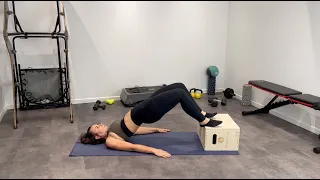
Feet elevated glute bridge
Intermediate
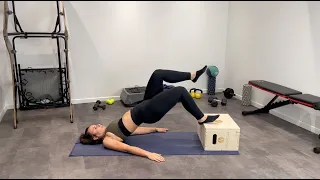
Feet elevated single leg glute bridge
Intermediate
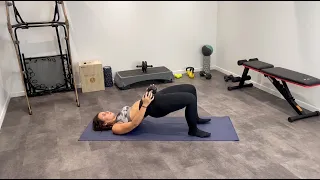
Dumbbell glute bridge
Beginner
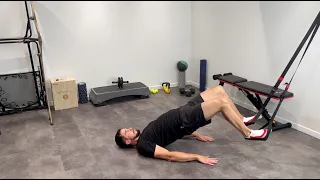
Trx glute bridge
Intermediate
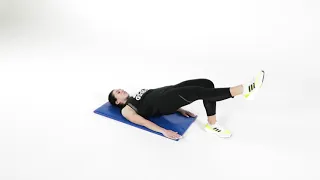
Single leg glute bridge
Intermediate
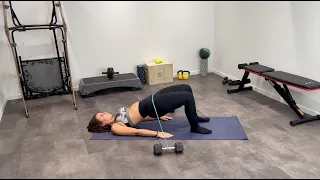
Banded glute bridge
Beginner
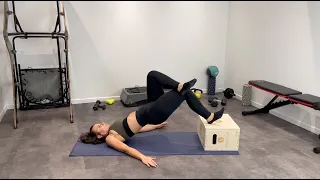
Feet elevated figure four glute bridge
Intermediate
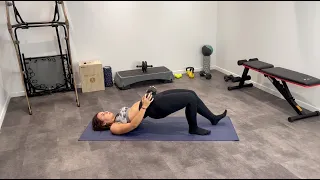
Dumbbell staggered glute bridge
Intermediate
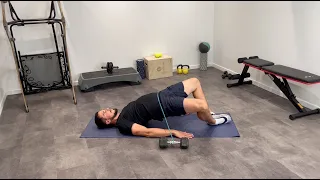
Banded frog pumps
Beginner
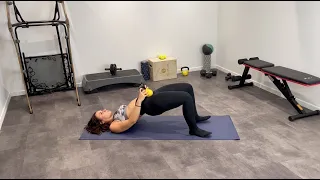
Kettlebell glute bridge
Beginner
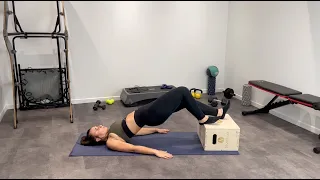
Feet elevated staggered glute bridge
Intermediate
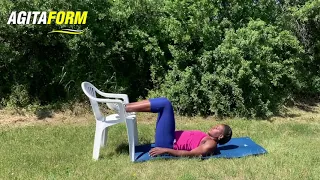
Feet elevated glute bridge
Beginner
Related fitness articles
See all
Shoulder pain in weight training: prevention and solutions
Risk of injuries
What is the best training structure?
Muscle gain
Lose weight fast: effective and safe methods
Diet

Dietary supplements: what should you know?
Health

Cardio and strength training: how to avoid interference
Weight loss

Supplements taken wrong: mistakes that cancel their effects
Dietary supplements

High-calorie foods: why choose them?
Muscle gain
Mind-muscle connection: the key to effective training
Muscle gain
Recommended by our experts
Receive your personalized program
Stop training at random.
Get my program- Program tailored to your profile
- Guided progression
- Compatible with your equipment
- Structured plan
Our coach prepares your program
Get my program