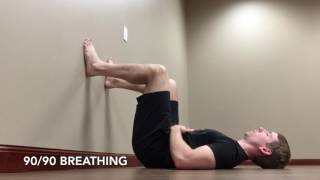
90-90 Breathing
Demonstration video
Recommended by our experts
Receive your personalized program
Stop training at random.
Get my program- Program tailored to your profile
- Guided progression
- Compatible with your equipment
- Structured plan
Our coach prepares your program
Get my programHow to do 90-90 Breathing
Instructions
- Lie on your back with hips and knees bent at 90 degrees and feet gently against a wall
- Keep your lower back lightly touching the floor and pelvis slightly tucked
- Place your hands on your lower ribs or abdomen to feel the breath
- Inhale gently through your nose focusing on expanding the lower ribcage
- Exhale slowly through your mouth allowing the ribcage to descend and abs to engage lightly
Technical tips
- Do not push aggressively into the wall
- Keep the neck and shoulders relaxed at all times
- Maintain a slight posterior pelvic tilt without forcing it
Breathing tips
- Inhale slowly through the nose for about 3 to 4 seconds
- Pause briefly without tension
- Exhale softly through the mouth for 4 to 6 seconds allowing abs to engage naturally
Medical restrictions
- Avoid if acute lower back pain is present
- Consult a specialist if you have breathing disorders or diaphragmatic dysfunction
- Be cautious with severe hip or pelvic instability
Description
The 90-90 Breathing exercise is a foundational postural and respiratory drill designed to retrain diaphragmatic breathing and promote proper ribcage and pelvic alignment. Performed lying on the floor with the legs elevated at a 90-degree angle against a wall, this position provides natural support to reduce spinal compression and encourage the diaphragm to function efficiently without excessive tension in the chest, neck, or lower back. It is frequently used in rehabilitation, corrective exercise, and performance warm-ups as it helps teach the body to restore proper breathing mechanics, improve intra-abdominal pressure, and relax compensatory muscles. This exercise is particularly effective for individuals with poor posture, stress-related chest breathing, or lower back tightness. Over time, it can contribute to better core stability, improved mobility through the ribcage and pelvis, and enhanced parasympathetic relaxation. Because it is performed without equipment and with minimal physical strain, it is suitable for beginners and advanced athletes alike as a rebalancing and nervous system reset drill. Whether used as a recovery technique, pre-training activation method, or daily posture correction routine, 90-90 Breathing offers essential neuromuscular benefits for breathing efficiency, spinal support, and overall movement quality.
Frequently asked questions
-
What are the benefits of doing 90-90 Breathing?
90-90 Breathing improves diaphragmatic breathing, reduces lower back tension, enhances core stability, and helps reset posture by aligning the ribcage and pelvis. -
Is 90-90 Breathing safe for lower back pain?
Yes, it is generally safe and often recommended for lower back discomfort because it reduces spinal compression, but any acute pain should be evaluated by a professional first. -
What is the most common mistake during 90-90 Breathing?
The most common mistake is arching the lower back or over-bracing the abs instead of allowing a gentle natural exhale and subtle pelvic tuck. -
How long should I perform 90-90 Breathing?
A typical session lasts 2 to 5 minutes focusing on slow controlled breathing cycles rather than counting repetitions. -
How does 90-90 Breathing compare to regular supine diaphragmatic breathing?
90-90 Breathing offers more pelvic and ribcage support through wall contact, making it easier to find proper alignment compared to a fully flat supine breathing drill.
Variants and alternatives
See all

Related fitness articles
See all
Shoulder pain in weight training: prevention and solutions
Risk of injuries

What is the best training structure?
Muscle gain

Lose weight fast: effective and safe methods
Diet

Dietary supplements: what should you know?
Health

Cardio and strength training: how to avoid interference
Weight loss
Supplements taken wrong: mistakes that cancel their effects
Dietary supplements

High-calorie foods: why choose them?
Muscle gain
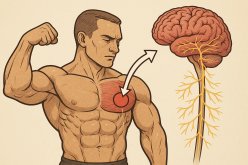
Mind-muscle connection: the key to effective training
Muscle gain
Recommended by our experts
Receive your personalized program
Stop training at random.
Get my program- Program tailored to your profile
- Guided progression
- Compatible with your equipment
- Structured plan
Our coach prepares your program
Get my program