TRX Single Leg Squat
Demonstration video

Recommended by our experts
Receive your personalized program
Stop training at random.
Get my program- Program tailored to your profile
- Guided progression
- Compatible with your equipment
- Structured plan
Our coach prepares your program
Get my programHow to do TRX Single Leg Squat
Instructions
- Stand facing the anchor point with both hands gripping the TRX handles, arms extended.
- Lift one leg off the floor and extend it forward, keeping the foot off the ground.
- Bend the standing knee to lower your body into a squat while keeping the other leg extended.
- Descend until your thigh is parallel to the floor or as low as control allows.
- Press through the heel of the standing leg to return to the starting position.
Technical Tips
- Keep your torso upright and your core engaged throughout the movement.
- Avoid letting the knee of the standing leg cave inward.
- Use the TRX straps only for balance, not to pull yourself up.
- Control the descent to avoid falling into the bottom position.
Breathing Tips
- Inhale as you lower into the squat.
- Exhale as you push back up to the starting position.
Medical restrictions
- Knee injuries or instability
- Severe ankle or hip joint issues
- Post-surgical lower limb conditions
- Balance disorders
Description
The TRX Single Leg Squat, also known as the TRX Pistol Squat, is a challenging lower-body exercise that enhances unilateral strength, balance, and functional mobility. By utilizing suspension straps, this movement provides an effective alternative to traditional pistol squats by allowing users to maintain balance and control throughout the entire range of motion. This makes it ideal for athletes seeking to build strength symmetrically across both legs and reduce muscular imbalances.
Incorporating the TRX Single Leg Squat into a training program helps improve knee and hip joint stability, develop powerful glutes and quads, and enhance proprioception. The exercise is particularly beneficial for rehabilitation settings and performance enhancement, as it targets multiple muscle groups while demanding significant core engagement. Additionally, the use of suspension straps promotes joint-friendly mechanics by reducing load and allowing customized intensity levels, making it suitable for users transitioning from bilateral to unilateral training. Whether aiming to progress to a freestanding pistol squat or improve lower-body endurance and control, this exercise delivers a comprehensive strength and stability stimulus.
Frequently asked questions
-
How do I do a TRX single leg squat properly?
To perform a TRX single leg squat, hold the straps, lift one leg, and lower your body into a squat on the standing leg while keeping your back straight and core tight. Use the straps for balance, not support, and rise back up through the heel. -
What muscles does the TRX pistol squat work?
The TRX pistol squat primarily targets the quadriceps and glutes, while also engaging the hamstrings, calves, and core for balance and control. -
Is the TRX single leg squat good for beginners?
The TRX single leg squat is an advanced movement, but it can be adapted for intermediate users due to the balance assistance provided by the straps. Beginners should first build strength with bilateral squats before progressing. -
What are the benefits of doing a TRX single leg squat?
Benefits of the TRX single leg squat include improved balance, enhanced lower-body strength, better joint stability, and reduced muscular imbalances between legs. -
Can TRX single leg squats help with knee stability?
Yes, TRX single leg squats can improve knee stability by strengthening surrounding muscles and promoting proper joint alignment during unilateral movement.
Variants and alternatives
See all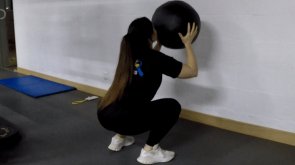
Wall ball squat throw
Intermediate
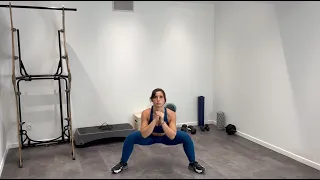
Sumo squat
Beginner
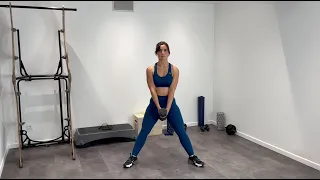
Dumbbell sumo squat
Beginner
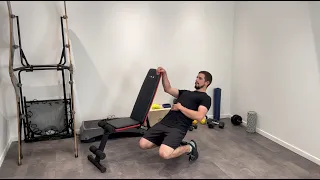
Sissy squat
Advanced
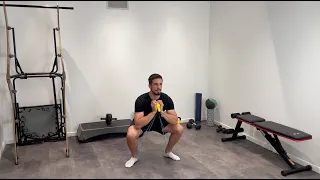
Banded kettlebell goblet squat
Intermediate
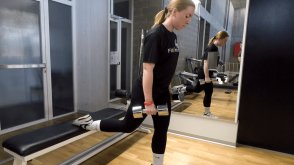
Bulgarian split squat with dumbbells
Intermediate
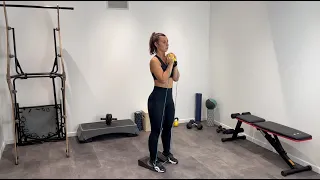
Goblet banded cyclist squat
Intermediate
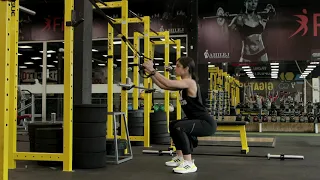
Trx squat jump
Intermediate
Kettlebell squat
Beginner
Squat without equipment
Beginner
Plate loaded banded spanish squat
Intermediate
Heel elevated squat hold
Beginner
Related fitness articles
See all
Shoulder pain in weight training: prevention and solutions
Risk of injuries
What is the best training structure?
Muscle gain
Lose weight fast: effective and safe methods
Diet

Dietary supplements: what should you know?
Health
Cardio and strength training: how to avoid interference
Weight loss
Supplements taken wrong: mistakes that cancel their effects
Dietary supplements
High-calorie foods: why choose them?
Muscle gain
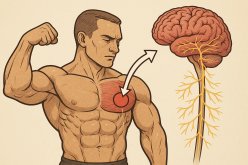
Mind-muscle connection: the key to effective training
Muscle gain
Recommended by our experts
Receive your personalized program
Stop training at random.
Get my program- Program tailored to your profile
- Guided progression
- Compatible with your equipment
- Structured plan
Our coach prepares your program
Get my program