Back Extension
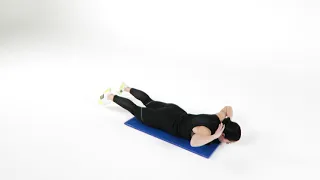
Demonstration video
Recommended by our experts
Receive your personalized program
Stop training at random.
Get my program- Program tailored to your profile
- Guided progression
- Compatible with your equipment
- Structured plan
Our coach prepares your program
Get my programHow to do Back Extension
Instructions
- Lie face down on a mat with your arms extended alongside your body or in front of you.
- Engage your glutes and lower back to lift your chest, arms, and legs slightly off the ground.
- Hold the raised position for the desired duration, keeping your neck neutral.
- Lower slowly back to the starting position with control.
Technical Tips
- Avoid overarching your lower back; keep the movement controlled.
- Keep your head aligned with your spine to avoid neck strain.
- Squeeze your glutes to support spinal alignment and enhance activation.
Breathing Tips
- Inhale before lifting your body.
- Exhale slowly as you lift and hold the position.
- Inhale again as you return to the starting position.
Medical restrictions
- Avoid if you have a history of lumbar disc herniation.
- Consult a physician if you experience lower back pain during the movement.
- Not recommended for individuals with severe spinal hyperlordosis.
Description
The back extension exercise, also known as the prone back extension or Superman hold, is a foundational bodyweight movement designed to strengthen the muscles of the posterior chain. Performed without any equipment, this exercise primarily targets the back, especially the lower back, while also engaging the glutes and hamstrings for stability and control. It is highly beneficial for improving posture, enhancing spinal alignment, and building core endurance. Regular inclusion of back extensions in a fitness routine can aid in injury prevention by reinforcing the muscles that support the spine during daily activities and athletic performance. This exercise is suitable for beginners and can be modified for advanced users by increasing hold time or adding movement variations. It requires minimal space and no equipment, making it an accessible choice for home workouts, rehabilitation programs, or as part of a warm-up routine for more intensive back training. When executed with proper form and control, the back extension is a safe and effective movement for enhancing functional strength and postural stability.
Frequently asked questions
-
What muscles do back extensions target the most?
Back extensions primarily target the lower back muscles, specifically the erector spinae, while also engaging the glutes and hamstrings for support and control. -
Is the back extension exercise safe for beginners?
Yes, back extensions are generally safe for beginners when performed with proper form and without excessive arching of the spine, making them ideal for building foundational posterior strength. -
Can I do back extensions without any equipment?
Absolutely. Back extensions can be performed without any equipment by lying face down on a mat and lifting your chest and legs off the ground, commonly known as the Superman exercise. -
How long should I hold a back extension?
Holding a back extension for 20 to 30 seconds is a good starting point for beginners, gradually increasing duration as core and back endurance improves. -
Are back extensions good for posture improvement?
Yes, back extensions help strengthen the muscles that support the spine, which can significantly improve posture and reduce the risk of back-related discomfort.




Related fitness articles
See all
Shoulder pain in weight training: prevention and solutions
Risk of injuries

What is the best training structure?
Muscle gain

Lose weight fast: effective and safe methods
Diet

Dietary supplements: what should you know?
Health

Cardio and strength training: how to avoid interference
Weight loss

Supplements taken wrong: mistakes that cancel their effects
Dietary supplements

High-calorie foods: why choose them?
Muscle gain

Mind-muscle connection: the key to effective training
Muscle gain
Recommended by our experts
Receive your personalized program
Stop training at random.
Get my program- Program tailored to your profile
- Guided progression
- Compatible with your equipment
- Structured plan
Our coach prepares your program
Get my program