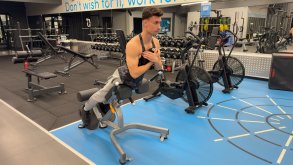
Standing Lumbar Extension
Demonstration video

Recommended by our experts
Receive your personalized program
Stop training at random.
Get my program- Program tailored to your profile
- Guided progression
- Compatible with your equipment
- Structured plan
Our coach prepares your program
Get my programHow to do Standing Lumbar Extension
Instructions
- Stand tall with your feet hip-width apart on a flat surface.
- Place your hands on your hips or lower back for support.
- Gently extend your spine by leaning backward from your hips.
- Hold the position for 2–3 seconds without straining.
- Return slowly to the neutral standing position and repeat.
Technical tips
- Keep your knees slightly bent to reduce pressure on the lower back.
- Engage your core throughout the movement for stability.
- Avoid excessive arching or jerking the spine backward.
Breathing tips
- Inhale deeply before beginning the movement.
- Exhale slowly as you extend your spine backward.
- Inhale again as you return to the starting position.
Medical restrictions
- Avoid this exercise if you have acute lower back pain or lumbar disc herniation.
- Consult a healthcare professional if you experience sharp pain during extension.
- Not recommended for individuals with severe spinal arthritis or instability.
Description
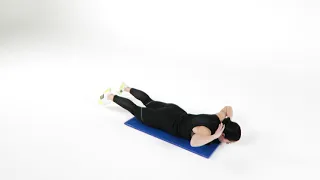
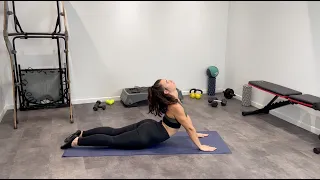
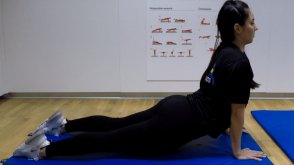
The standing lumbar extension is a gentle mobility and activation exercise designed to improve spinal extension and relieve tension in the lower back. It is commonly used in warm-up routines, recovery sessions, or rehabilitation programs to promote healthy posture and counteract the effects of prolonged sitting. This exercise primarily strengthens the muscles of the lower back and enhances flexibility of the lumbar spine, helping maintain proper alignment and spinal mobility. Performing the standing lumbar extension regularly can reduce stiffness, improve range of motion, and prevent back discomfort associated with sedentary habits. It is particularly beneficial for office workers, athletes, and individuals recovering from mild back strain. Executed without equipment, it can be performed virtually anywhere, making it a practical choice for daily mobility maintenance. When performed correctly, this exercise reinforces the erector spinae and gluteal engagement while promoting spinal awareness and balance between flexion and extension movements.
Frequently asked questions
-
What are the benefits of doing standing lumbar extensions?
Standing lumbar extensions improve lower back mobility, relieve stiffness, and promote better posture by strengthening the erector spinae muscles. -
Is the standing lumbar extension safe for the lower back?
Yes, when done gently and with proper form, it is safe and helps maintain spinal health. Avoid overextension or sudden movements to prevent strain. -
What is the most common mistake in the standing lumbar extension?
The most common mistake is leaning too far back or arching the spine excessively, which can cause unnecessary pressure on the lumbar region. -
How often should I perform standing lumbar extensions?
You can safely perform this exercise daily, especially after long periods of sitting or as part of a warm-up and recovery routine. -
What muscles does the standing lumbar extension target?
This exercise primarily targets the lower back muscles, especially the erector spinae, while engaging the glutes and hamstrings for stability. -
How does the standing lumbar extension compare to the prone back extension?
The standing lumbar extension is lower intensity and focuses more on mobility and posture, while the prone back extension builds greater strength in the lower back.


Related fitness articles
See all
Shoulder pain in weight training: prevention and solutions
Risk of injuries

What is the best training structure?
Muscle gain

Lose weight fast: effective and safe methods
Diet

Dietary supplements: what should you know?
Health

Cardio and strength training: how to avoid interference
Weight loss

Supplements taken wrong: mistakes that cancel their effects
Dietary supplements

High-calorie foods: why choose them?
Muscle gain

Mind-muscle connection: the key to effective training
Muscle gain
Recommended by our experts
Receive your personalized program
Stop training at random.
Get my program- Program tailored to your profile
- Guided progression
- Compatible with your equipment
- Structured plan
Our coach prepares your program
Get my program