Running
Demonstration video

Recommended by our experts
Receive your personalized program
Stop training at random.
Get my program- Program tailored to your profile
- Guided progression
- Compatible with your equipment
- Structured plan
Our coach prepares your program
Get my programHow to do Running
Instructions
- Start standing upright with a slight forward lean.
- Begin with a light jog to warm up the body.
- Gradually increase your pace to a steady running speed.
- Maintain a relaxed arm swing and steady breathing.
- Run for the desired duration or distance.
- Cool down by reducing your speed gradually.
Technical Tips
- Keep your posture upright and shoulders relaxed.
- Land midfoot to avoid excessive heel striking.
- Avoid overstriding to minimize impact stress.
- Maintain a consistent cadence for efficiency.
Breathing Tips
- Inhale through the nose and exhale through the mouth.
- Use rhythmic breathing in sync with your stride.
- Breathe deeply and avoid shallow chest breaths.
Medical restrictions
- Knee osteoarthritis or joint degeneration
- Severe plantar fasciitis
- Lower back disc injuries
- Chronic hip or ankle instability
Description
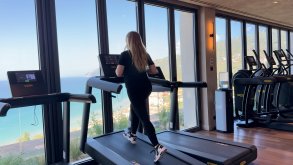
Running is a fundamental cardiovascular exercise that promotes heart health, improves aerobic capacity, and enhances endurance. Whether performed outdoors or on a treadmill, running engages the entire lower body while providing a high-calorie burn and mood-boosting benefits. It is one of the most accessible forms of physical activity, suitable for a wide range of fitness levels. Regular running improves circulation, respiratory efficiency, and metabolic function. It also helps in managing body weight, increasing bone density, and strengthening muscular coordination. From casual joggers to competitive athletes, running remains a foundational component of fitness programs due to its effectiveness, simplicity, and adaptability across training goals and environments.
Frequently asked questions
-
What muscles does running work the most?
Running primarily targets the quadriceps, glutes, hamstrings, and calves, while also engaging the core and stabilizer muscles for posture and control. -
Is treadmill running as effective as outdoor running?
Yes, treadmill running is effective and allows for controlled conditions, though outdoor running may offer more variability and terrain challenges. -
Can I run every day?
Daily running is possible if intensity, duration, and recovery are managed properly, but rest days or cross-training are recommended to avoid overuse injuries. -
Is running good for weight loss?
Yes, running is excellent for weight loss due to its high calorie expenditure and ability to boost metabolic rate and cardiovascular fitness. -
How long should I run to improve my fitness?
Running for 20–30 minutes at moderate intensity, three to five times per week, is sufficient to improve general cardiovascular fitness.
Variants and alternatives
See all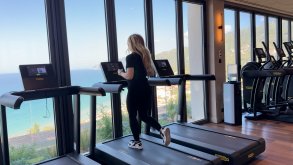
Related fitness articles
See all
Shoulder pain in weight training: prevention and solutions
Risk of injuries

What is the best training structure?
Muscle gain

Lose weight fast: effective and safe methods
Diet

Dietary supplements: what should you know?
Health

Cardio and strength training: how to avoid interference
Weight loss
Supplements taken wrong: mistakes that cancel their effects
Dietary supplements

High-calorie foods: why choose them?
Muscle gain
Mind-muscle connection: the key to effective training
Muscle gain
Recommended by our experts
Receive your personalized program
Stop training at random.
Get my program- Program tailored to your profile
- Guided progression
- Compatible with your equipment
- Structured plan
Our coach prepares your program
Get my program