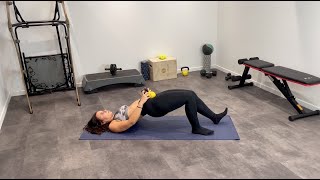
Kettlebell Offset Glute Bridge
Demonstration video
Recommended by our experts
Receive your personalized program
Stop training at random.
Get my program- Program tailored to your profile
- Guided progression
- Compatible with your equipment
- Structured plan
Our coach prepares your program
Get my programHow to do Kettlebell Offset Glute Bridge
Instructions
- Lie on your back with both knees bent and both feet on the floor, one foot placed slightly forward.
- Hold a kettlebell over your pelvis with both hands.
- Push through the heel of the rear leg (closer to your glutes) to lift your hips off the floor.
- Raise your hips until your body forms a straight line from shoulders to knees.
- Lower your hips back to the floor in a controlled motion.
- Switch foot positions after completing the set to train the other side asymmetrically.
Technical Tips
- Keep the foot of the working leg closer to your glutes and drive through its heel.
- Engage your core to prevent lumbar hyperextension.
- Do not push through the forward foot; it provides minimal support only.
- Stabilize the kettlebell with both hands directly above the hips.
Breathing Tips
- Inhale before lifting.
- Exhale as you drive your hips up.
- Inhale again while lowering down with control.
Medical restrictions
- Lower back injuries or disc issues
- Recent hamstring strain
- Hip instability or labral pathology
Description
The Kettlebell Offset Glute Bridge is an effective posterior chain exercise designed to emphasize glute activation while introducing asymmetry for improved balance and control. Unlike traditional glute bridges, this variation places one foot slightly forward, creating a unilateral loading effect that challenges each side of the body differently. The use of a kettlebell across the hips adds resistance, intensifying the muscle engagement without needing large equipment. It’s particularly useful for athletes and fitness enthusiasts aiming to correct lower-body imbalances, strengthen hip extension mechanics, and improve pelvic stability. The offset position subtly reduces the assistance from the forward leg, increasing the demand on the working glute. This movement is accessible, requiring minimal space and equipment, and is ideal for both home and gym environments. It is best performed in a controlled, deliberate manner to maximize effectiveness and reduce compensations. Switch foot positions between sets to ensure symmetrical training stimulus.
Frequently asked questions
-
What is the purpose of the offset foot position in a glute bridge?
The offset foot position in a glute bridge increases the load on one glute at a time, promoting better muscle activation and balance correction between the left and right sides. -
Should I feel the forward foot working in the offset glute bridge?
No, the forward foot should only provide minimal support. Most of the force should come from the heel of the closer leg pushing into the ground. -
Is the Kettlebell Offset Glute Bridge good for glute isolation?
Yes, it effectively isolates the glutes, especially the gluteus maximus, while minimizing compensation from the hamstrings or lower back. -
Can I do this exercise without a kettlebell?
Yes, you can perform a bodyweight version of the offset glute bridge, which still provides an asymmetrical load for targeted glute activation.
Variants and alternatives
See all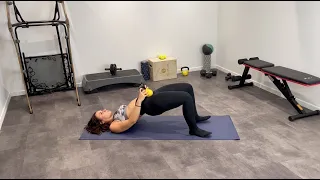
Kettlebell glute bridge
Beginner
Glute bridge hold
Beginner
Frog pump
Beginner
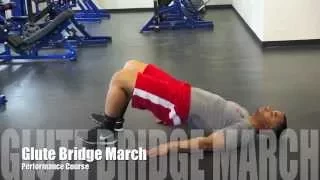
Glute bridge march
Beginner
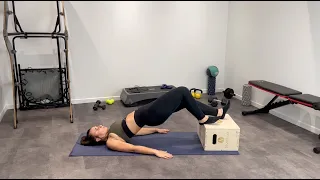
Feet elevated staggered glute bridge
Intermediate
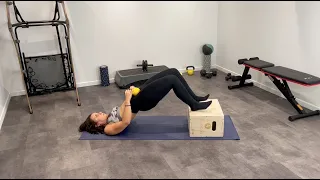
Kettlebell feet elevated glute bridge
Intermediate
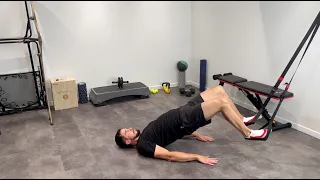
Trx glute bridge
Intermediate
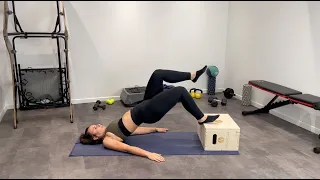
Feet elevated single leg glute bridge
Intermediate
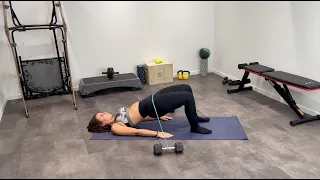
Banded glute bridge
Beginner
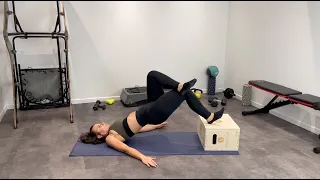
Feet elevated figure four glute bridge
Intermediate
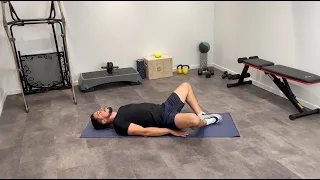
Frog pumps
Beginner
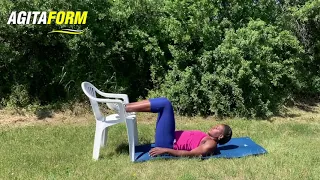
Feet elevated glute bridge
Beginner
Related fitness articles
See all
Shoulder pain in weight training: prevention and solutions
Risk of injuries
What is the best training structure?
Muscle gain
Lose weight fast: effective and safe methods
Diet

Dietary supplements: what should you know?
Health

Cardio and strength training: how to avoid interference
Weight loss
Supplements taken wrong: mistakes that cancel their effects
Dietary supplements
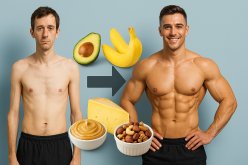
High-calorie foods: why choose them?
Muscle gain
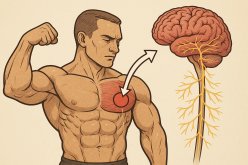
Mind-muscle connection: the key to effective training
Muscle gain
Recommended by our experts
Receive your personalized program
Stop training at random.
Get my program- Program tailored to your profile
- Guided progression
- Compatible with your equipment
- Structured plan
Our coach prepares your program
Get my program