Kettlebell Overhead Reverse Lunge
Demonstration video

Recommended by our experts
Receive your personalized program
Stop training at random.
Get my program- Program tailored to your profile
- Guided progression
- Compatible with your equipment
- Structured plan
Our coach prepares your program
Get my programHow to do Kettlebell Overhead Reverse Lunge
Instructions
- Stand upright with feet shoulder-width apart, holding a kettlebell overhead with one or both hands.
- Engage your core and step one leg backward into a reverse lunge.
- Lower your back knee toward the ground until both knees form 90-degree angles.
- Keep the kettlebell stable and directly overhead throughout the movement.
- Push through your front heel to return to the starting position.
- Repeat on the opposite side.
Technical Tips
- Keep your core tight to prevent arching in the lower back.
- Maintain a neutral spine and avoid leaning forward.
- Ensure the kettlebell remains aligned over your shoulder and hip.
- Move in a controlled manner to maintain balance and form.
Breathing Tips
- Inhale as you step back into the lunge.
- Exhale as you push back up to the starting position.
- Maintain steady breathing throughout the exercise.
Medical restrictions
- Shoulder instability or recent shoulder injuries
- Lower back pain or spinal disc issues
- Knee injuries or post-surgical recovery
Description
The Kettlebell Overhead Reverse Lunge is a powerful compound exercise that enhances lower-body strength, shoulder stability, and core control. By combining the reverse lunge with an overhead kettlebell hold, this movement challenges balance, coordination, and muscular endurance. It's ideal for athletes and fitness enthusiasts aiming to improve functional strength and unilateral leg power. The overhead position recruits stabilizing muscles in the shoulders and core, making it a valuable addition to total-body training routines. Unlike traditional lunges, this variation increases the neuromuscular demand, promoting better posture and enhancing proprioception. The reverse step places less stress on the knees compared to forward lunges, making it suitable for individuals with minor knee sensitivities. Incorporating this movement helps correct muscular imbalances, improves hip mobility, and develops overhead stability essential for performance in various sports and lifting disciplines.
Frequently asked questions
-
What muscles does the Kettlebell Overhead Reverse Lunge work?
The Kettlebell Overhead Reverse Lunge primarily works the glutes, quadriceps, and shoulders, while also engaging the core, hamstrings, and stabilizers like the gluteus medius and anterior deltoid. -
Is the Kettlebell Overhead Reverse Lunge good for improving balance?
Yes, this exercise is excellent for improving balance and coordination due to the overhead load and unilateral leg movement, which challenge stability throughout the body. -
Can beginners do the Kettlebell Overhead Reverse Lunge?
While it's an intermediate-level exercise, beginners can perform it using lighter kettlebells or bodyweight to develop proper form and balance before progressing to heavier loads. -
What weight should I use for the Kettlebell Overhead Reverse Lunge?
Start with a light kettlebell that allows you to maintain full control overhead and perform the lunge with proper form; progress gradually as strength and stability improve. -
How does the overhead position affect the lunge?
The overhead position increases core engagement and shoulder stability demands, making the exercise more challenging and effective for full-body strength development.
Variants and alternatives
See all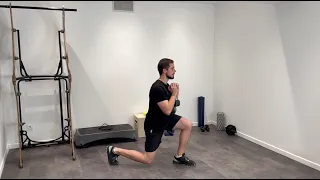
Dumbbell goblet pulse lunge
Intermediate
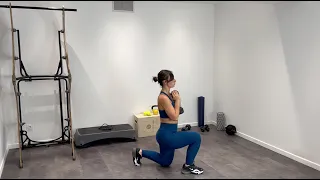
Goblet front lunge
Beginner
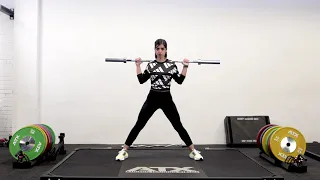
Barbell lateral lunge
Intermediate
Smith machine lunge
Intermediate
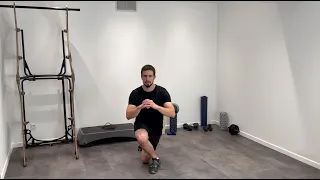
Curtsy lunge
Intermediate
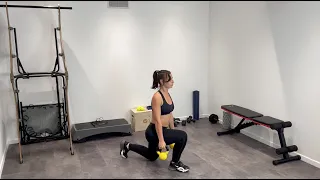
Kettlebell reverse lunge
Intermediate
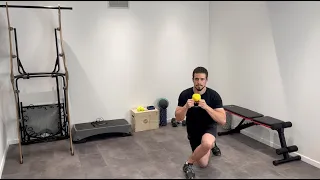
Kettlebell goblet reverse curtsy lunge
Intermediate
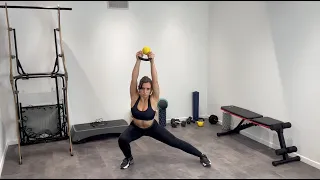
Kettlebell overhead lateral lunge
Intermediate
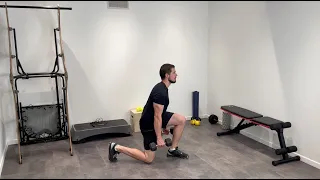
Dumbbell jumping lunge
Advanced
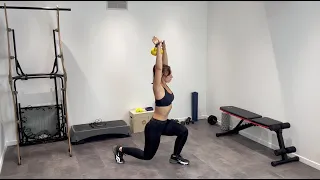
Kettlebell overhead pulse lunge
Advanced

Dynamic lunges
Intermediate
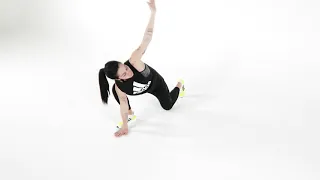
Lunge with thoracic rotation
Beginner
Related fitness articles
See all
Shoulder pain in weight training: prevention and solutions
Risk of injuries
What is the best training structure?
Muscle gain
Lose weight fast: effective and safe methods
Diet

Dietary supplements: what should you know?
Health

Cardio and strength training: how to avoid interference
Weight loss
Supplements taken wrong: mistakes that cancel their effects
Dietary supplements

High-calorie foods: why choose them?
Muscle gain
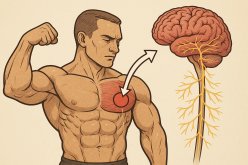
Mind-muscle connection: the key to effective training
Muscle gain
Recommended by our experts
Receive your personalized program
Stop training at random.
Get my program- Program tailored to your profile
- Guided progression
- Compatible with your equipment
- Structured plan
Our coach prepares your program
Get my program