Unilateral Leg Press
Demonstration video

Recommended by our experts
Receive your personalized program
Stop training at random.
Get my program- Program tailored to your profile
- Guided progression
- Compatible with your equipment
- Structured plan
Our coach prepares your program
Get my programHow to do Unilateral Leg Press
Instructions
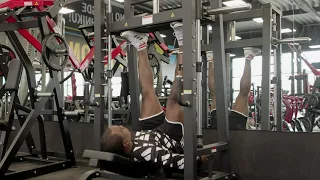
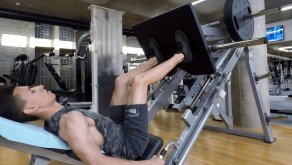
- Sit on the leg press machine and place one foot on the platform at shoulder width.
- Ensure your back and hips remain in contact with the backrest throughout the movement.
- Push the platform upward until your working leg is fully extended but not locked.
- Slowly lower the platform by bending your knee until it reaches approximately 90 degrees.
- Drive through your heel to push the platform back to the starting position.
- Repeat for the desired reps and switch legs.
Technical Tips
- Keep your knee aligned with your toes to avoid valgus collapse.
- Do not lock the knee at the top to maintain joint safety.
- Engage your core to stabilize your pelvis and spine.
Breathing Tips
- Inhale as you lower the platform.
- Exhale as you push back to the starting position.
Medical restrictions
- Knee injuries or instability
- Hip joint pathologies
- Lower back pain or herniated discs
Description
The Unilateral Leg Press is a machine-based lower body strength exercise that targets one leg at a time, helping to correct muscular imbalances between limbs. It is particularly effective for developing the quadriceps and glutes while reducing the load on the spine compared to free weight alternatives. This movement is executed on a guided leg press machine, offering both safety and support, especially beneficial for users recovering from injury or looking to isolate leg strength. Unlike the bilateral version, the single-leg variation enhances coordination, control, and balance. It is also a preferred option in rehabilitation and athletic programs where unilateral strength and symmetry are prioritized. The Unilateral Leg Press can be adjusted in foot placement to slightly emphasize different muscle regions, such as higher positioning to activate the glutes or lower for more quad isolation. Overall, it is a versatile and accessible exercise suitable for intermediate users seeking targeted lower body strength development without overloading the spine or compromising form.
Frequently asked questions
-
What muscles does the Unilateral Leg Press target?
The Unilateral Leg Press primarily targets the quadriceps and glutes, while also engaging the hamstrings, calves, and adductors as secondary muscles. -
Is the Unilateral Leg Press good for correcting muscle imbalances?
Yes, the Unilateral Leg Press helps correct left-right strength imbalances by isolating each leg, making it ideal for balanced lower body development. -
Can beginners do the Unilateral Leg Press?
While it's generally suited for intermediate users, beginners can perform the Unilateral Leg Press with light loads under proper supervision and technique. -
Is the Unilateral Leg Press safe for the knees?
Yes, when performed with proper alignment and range of motion, the Unilateral Leg Press is safe for the knees and reduces joint stress compared to some free-weight exercises. -
How does the Unilateral Leg Press compare to squats?
The Unilateral Leg Press offers spinal unloading and greater stability, making it a safer alternative to squats for targeting leg muscles, especially in rehabilitation or focused strength training.


Related fitness articles
See all
Shoulder pain in weight training: prevention and solutions
Risk of injuries
What is the best training structure?
Muscle gain
Lose weight fast: effective and safe methods
Diet
Dietary supplements: what should you know?
Health
Cardio and strength training: how to avoid interference
Weight loss
Supplements taken wrong: mistakes that cancel their effects
Dietary supplements

High-calorie foods: why choose them?
Muscle gain
Mind-muscle connection: the key to effective training
Muscle gain
Recommended by our experts
Receive your personalized program
Stop training at random.
Get my program- Program tailored to your profile
- Guided progression
- Compatible with your equipment
- Structured plan
Our coach prepares your program
Get my program