Stomach Vacuum
Demonstration video

Recommended by our experts
Receive your personalized program
Stop training at random.
Get my program- Program tailored to your profile
- Guided progression
- Compatible with your equipment
- Structured plan
Our coach prepares your program
Get my programHow to do Stomach Vacuum
Instructions
- Stand upright with feet shoulder-width apart or sit tall with a straight back.
- Exhale completely to empty your lungs.
- Draw your belly button in towards your spine as far as possible.
- Hold the contraction while maintaining normal breathing if possible.
- Release and repeat for the desired duration.
Technical Tips
- Keep your chest lifted and spine neutral during the contraction.
- Do not hold your breath excessively; focus on controlled engagement.
- Start with short holds and gradually increase time as control improves.
Breathing Tips
- Exhale fully before contracting the abdomen.
- Breathe lightly through your nose if holding for longer durations.
- Inhale only when you release the vacuum to reset.
Medical restrictions
- Pregnancy
- Recent abdominal surgery
- Hernia
- Severe lower back pain
Description
The stomach vacuum is an effective isometric exercise that targets deep core stabilising muscles, primarily the transverse abdominis. This technique involves pulling the abdominal wall inward to strengthen and tone the core without dynamic movement. The stomach vacuum helps improve posture by training abdominal bracing, enhances midsection tightness, and supports spinal stability in daily activities and training. Practising stomach vacuums regularly can also improve mind-muscle connection within the deep core, benefiting other compound lifts and functional movements. As a low-impact exercise, it is widely used in fitness, yoga, and pilates disciplines to develop a stronger and flatter abdominal region while minimising strain on the lower back. It is recommended for beginners as a foundation of core control before progressing to dynamic core strengthening movements.
Frequently asked questions
-
How often should I do stomach vacuums for best results?
For best results, perform stomach vacuums daily or at least 4-5 times per week, holding each contraction for 15-60 seconds depending on your control and comfort level. -
Do stomach vacuums really flatten the stomach?
Yes, stomach vacuums can help flatten the stomach by strengthening the transverse abdominis, which acts like a natural corset to tighten and hold in your abdominal area. -
Can I do stomach vacuums while sitting at my desk?
Yes, you can do stomach vacuums while sitting at your desk as long as you maintain an upright posture with your spine neutral for proper engagement of the abdominal muscles. -
Is it normal to feel lightheaded during stomach vacuums?
If you feel lightheaded during stomach vacuums, it may be due to holding your breath; ensure you breathe lightly during the hold and do not perform the exercise if you feel dizzy. -
Are stomach vacuums safe for people with hernias?
Stomach vacuums are not recommended for individuals with hernias as the increased intra-abdominal pressure may worsen the condition; consult your physician before performing this exercise.
Related fitness articles
See all
Shoulder pain in weight training: prevention and solutions
Risk of injuries

What is the best training structure?
Muscle gain

Lose weight fast: effective and safe methods
Diet

Dietary supplements: what should you know?
Health

Cardio and strength training: how to avoid interference
Weight loss

Supplements taken wrong: mistakes that cancel their effects
Dietary supplements

High-calorie foods: why choose them?
Muscle gain
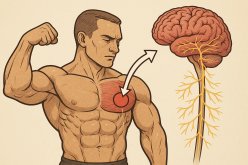
Mind-muscle connection: the key to effective training
Muscle gain
Recommended by our experts
Receive your personalized program
Stop training at random.
Get my program- Program tailored to your profile
- Guided progression
- Compatible with your equipment
- Structured plan
Our coach prepares your program
Get my program