Tuck Front Lever
Demonstration video

Recommended by our experts
Receive your personalized program
Stop training at random.
Get my program- Program tailored to your profile
- Guided progression
- Compatible with your equipment
- Structured plan
Our coach prepares your program
Get my programHow to do Tuck Front Lever
Instructions
- Hang from a pull-up bar with an overhand grip, arms straight.
- Tuck your knees toward your chest and engage your core.
- Lean back and lift your torso until it is parallel to the ground.
- Hold the position, keeping your back straight and core tight.
- Slowly lower yourself back down with control.
Technical tips
- Keep your scapula retracted to protect your shoulders.
- Do not arch your lower back, maintain a hollow body position.
- Keep knees tucked tightly to reduce leverage.
Breathing tips
- Inhale deeply before lifting into position.
- Exhale slowly while holding the tuck lever.
- Breathe steadily and avoid holding your breath for too long.
Medical restrictions
- Shoulder injuries
- Lower back pain
- Elbow or wrist issues
Description
The Tuck Front Lever is a fundamental calisthenics exercise designed to build core strength, shoulder stability, and back control. Performed by tucking the knees and holding the body parallel to the ground while hanging from a bar, it reduces the leverage compared to the full front lever, making it more accessible for intermediate athletes. This movement develops significant strength in the lats, abs, and scapular stabilizers, while also demanding strong engagement from the arms and grip. As a static hold, it emphasizes isometric strength, endurance, and total-body tension. The tuck position not only allows athletes to progress safely toward advanced lever variations but also improves balance and body awareness. Incorporating the Tuck Front Lever into training enhances pulling strength, control in gymnastic movements, and overall core development. It is an excellent progression exercise for building up to the full front lever, while still providing a challenging workout for the back and core muscles. Consistent practice will improve posture, midline stability, and functional strength, which carries over to many other calisthenics and strength disciplines.
Frequently asked questions
-
What muscles does the Tuck Front Lever work?
The Tuck Front Lever primarily works the core and back, especially the lats and abs, while also engaging the shoulders and arms for stability. -
What are the benefits of doing the Tuck Front Lever?
The Tuck Front Lever builds core strength, improves scapular stability, develops pulling power, and serves as a key progression toward mastering the full front lever. -
What is the most common mistake in the Tuck Front Lever?
A common mistake is arching the lower back instead of maintaining a hollow body position, which reduces effectiveness and increases strain on the spine. -
Is the Tuck Front Lever safe for shoulders and back?
Yes, it is safe when performed with proper scapular engagement and core tension, but it should be avoided if you have pre-existing shoulder or lower back injuries. -
How does the Tuck Front Lever compare to the full Front Lever?
The Tuck Front Lever is easier than the full Front Lever because bending the knees shortens the body’s lever arm, reducing load while still targeting the same muscles.
Variants and alternatives
See all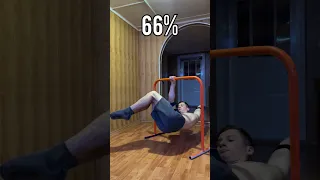
Related fitness articles
See all
Shoulder pain in weight training: prevention and solutions
Risk of injuries

What is the best training structure?
Muscle gain

Lose weight fast: effective and safe methods
Diet

Dietary supplements: what should you know?
Health

Cardio and strength training: how to avoid interference
Weight loss

Supplements taken wrong: mistakes that cancel their effects
Dietary supplements

High-calorie foods: why choose them?
Muscle gain
Mind-muscle connection: the key to effective training
Muscle gain
Recommended by our experts
Receive your personalized program
Stop training at random.
Get my program- Program tailored to your profile
- Guided progression
- Compatible with your equipment
- Structured plan
Our coach prepares your program
Get my program