Incline Dumbbell Press
Demonstration video
Recommended by our experts
Receive your personalized program
Stop training at random.
Get my program- Program tailored to your profile
- Guided progression
- Compatible with your equipment
- Structured plan
Our coach prepares your program
Get my programHow to do Incline Dumbbell Press
Instructions
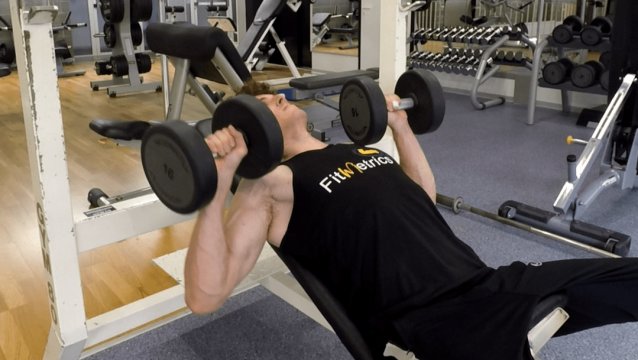
- Set the bench to an incline angle of about 30 to 45 degrees.
- Sit down holding a dumbbell in each hand and rest them on your thighs.
- Lie back and bring the dumbbells up to shoulder height with palms facing forward.
- Press the dumbbells upward until your arms are fully extended above your chest.
- Lower the dumbbells slowly back to the starting position with control.
- Repeat for the desired number of repetitions.
Technical Tips
- Keep your shoulder blades retracted and pressed into the bench throughout the movement.
- Do not let the dumbbells drift too far forward or backward.
- Avoid locking out your elbows at the top to maintain muscle tension.
Breathing Tips
- Inhale as you lower the dumbbells down toward your chest.
- Exhale as you press the dumbbells back up to the starting position.
Medical restrictions
- Shoulder impingement syndrome
- Rotator cuff injuries
- Severe upper back or cervical spine conditions
Description
The Dumbbell Incline Bench Press is a powerful upper-body strength exercise that targets the upper region of the pectoral muscles. Performed on an incline bench set between 30 to 45 degrees, this variation places greater emphasis on the upper chest while also engaging the shoulders and triceps. Using dumbbells allows for a greater range of motion compared to barbells, promoting balanced muscular development and improved joint stability. This exercise is highly effective for building mass and improving definition in the upper chest area, making it a staple in most bodybuilding and strength training programs. Additionally, it helps correct strength imbalances between the left and right sides of the body, as each arm works independently. The Dumbbell Incline Bench Press is best suited for intermediate to advanced trainees due to the need for control, coordination, and proper form. It is also frequently used as a complementary movement to flat and decline presses for comprehensive chest development.
Credits

Frequently asked questions
-
What muscles do incline dumbbell presses work?
Incline dumbbell presses primarily work the upper chest muscles, while also engaging the front deltoids and triceps for support and stabilization. -
Is incline dumbbell press better than flat bench?
Incline dumbbell press targets the upper chest more effectively than the flat bench press, making it ideal for developing a well-rounded chest when used alongside flat variations. -
How high should the bench be for incline dumbbell press?
The ideal incline angle for the dumbbell press is typically between 30 and 45 degrees, which optimally activates the upper chest without overloading the shoulders. -
Can beginners do incline dumbbell press?
Beginners can perform incline dumbbell presses with light weights and proper supervision, but should first master flat bench pressing for foundational strength and technique. -
Why use dumbbells instead of a barbell on incline press?
Dumbbells promote a greater range of motion, help correct muscle imbalances, and improve stabilizer muscle engagement compared to barbell incline presses.
Related fitness articles
See all
Shoulder pain in weight training: prevention and solutions
Risk of injuries

What is the best training structure?
Muscle gain

Lose weight fast: effective and safe methods
Diet

Dietary supplements: what should you know?
Health

Cardio and strength training: how to avoid interference
Weight loss

Supplements taken wrong: mistakes that cancel their effects
Dietary supplements

High-calorie foods: why choose them?
Muscle gain
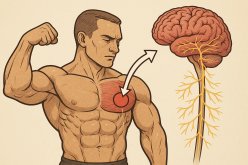
Mind-muscle connection: the key to effective training
Muscle gain
Recommended by our experts
Receive your personalized program
Stop training at random.
Get my program- Program tailored to your profile
- Guided progression
- Compatible with your equipment
- Structured plan
Our coach prepares your program
Get my program