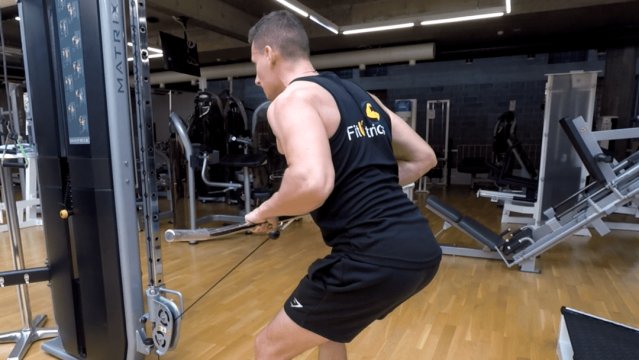
Cable Row with Straight Bar
Demonstration video
Recommended by our experts
Receive your personalized program
Stop training at random.
Get my program- Program tailored to your profile
- Guided progression
- Compatible with your equipment
- Structured plan
Our coach prepares your program
Get my programHow to do Cable Row with Straight Bar
Instructions
- Attach a straight bar to the low pulley of a cable machine.
- Stand with feet shoulder-width apart and knees slightly bent.
- Lean your torso slightly forward at about a 15–30 degree angle, keeping your back straight.
- Grab the bar with a pronated grip, arms fully extended forward.
- Engage your core and pull the bar towards your torso, keeping elbows close to your body.
- Squeeze your shoulder blades together at the peak of the contraction.
- Slowly return the bar to the starting position under control.
Technical Tips
- Keep your back straight and chest up throughout the movement.
- Lean forward slightly to optimize the pulling angle and muscle engagement.
- Avoid using momentum; perform the motion in a controlled manner.
- Focus on retracting the scapula rather than pulling with the arms.
- Maintain a neutral neck position to avoid strain.
Breathing Tips
- Inhale during the starting position.
- Exhale as you pull the bar toward your torso.
- Inhale as you return to the starting position.
Medical restrictions
- Avoid if you have lower back injuries or spinal disc issues.
- Caution for individuals with shoulder impingement or rotator cuff problems.
- Not recommended for those with recent elbow or wrist injuries.
Description
The Cable Straight Bar Row is a compound back exercise primarily designed to build strength and thickness in the middle and upper back. Using a straight bar attached to a low pulley, this movement targets the latissimus dorsi, rhomboids, and rear deltoids while also engaging the biceps and forearms for support. It is an excellent exercise for improving posture and developing a well-balanced upper body. The cable machine provides constant tension, which enhances muscle activation throughout the entire range of motion. Standing with a slight forward lean improves biomechanical alignment and allows for better muscle recruitment. Unlike free weights, the controlled path of the cable makes this row variation ideal for reducing joint strain and optimizing muscle engagement. Suitable for intermediate lifters, it can be integrated into bodybuilding, general fitness, and strength training routines. For best results, focus on form, controlled movement, and proper breathing to fully engage the targeted muscles.
Credits

Frequently asked questions
-
What muscles does the cable straight bar row work?
The cable straight bar row primarily targets the back, especially the lats, with secondary activation in the rhomboids, rear deltoids, and biceps for added pulling support. -
Is the cable row with straight bar good for beginners?
While manageable for beginners, the cable row with straight bar is best suited for intermediates due to the need for good posture control and proper back engagement during the pull. -
Can I replace barbell rows with cable rows?
Yes, cable rows can be a joint-friendly alternative to barbell rows, offering constant resistance and better control for muscle isolation and back development. -
How do I avoid lower back pain during cable rows?
To avoid lower back pain, keep your back neutral, engage your core, and lean slightly forward while maintaining a strong trunk throughout the exercise. -
Should I use an overhand or underhand grip on the straight bar row?
An overhand (pronated) grip is standard and targets the upper back, while an underhand (supinated) grip can shift emphasis slightly to the biceps. Choose based on your training goal.
Variants and alternatives
See all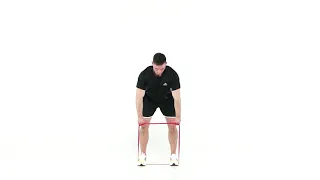
Banded bent over row
Beginner

One-arm dumbbell row
Intermediate
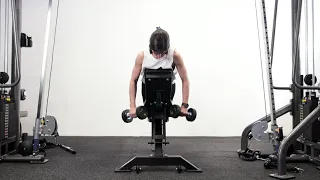
Dumbbell incline row
Intermediate

Seated row with resistance band
Beginner
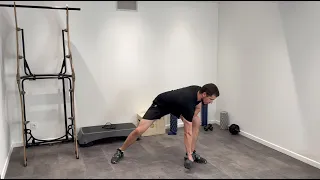
Side lunge dumbbell row with supination
Intermediate
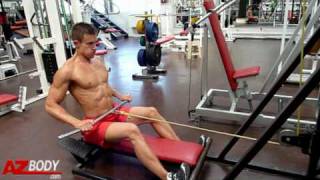
Seated wide grip cable row
Intermediate
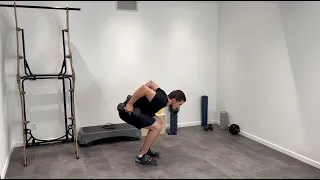
Dumbbell pendlay row
Intermediate

T-bar row
Intermediate
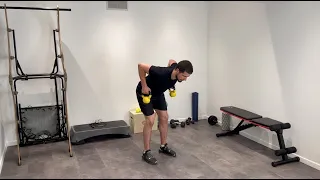
Kettlebell neutral row
Intermediate
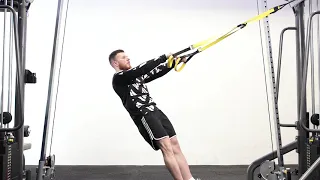
Trx high row
Intermediate
Trx rear delt row
Intermediate
Barbell bent-over row
Intermediate
Related fitness articles
See all
Shoulder pain in weight training: prevention and solutions
Risk of injuries

What is the best training structure?
Muscle gain

Lose weight fast: effective and safe methods
Diet

Dietary supplements: what should you know?
Health

Cardio and strength training: how to avoid interference
Weight loss

Supplements taken wrong: mistakes that cancel their effects
Dietary supplements

High-calorie foods: why choose them?
Muscle gain

Mind-muscle connection: the key to effective training
Muscle gain
Recommended by our experts
Receive your personalized program
Stop training at random.
Get my program- Program tailored to your profile
- Guided progression
- Compatible with your equipment
- Structured plan
Our coach prepares your program
Get my program