Supplements taken wrong: mistakes that cancel their effects
Many athletes use dietary supplements, sometimes wisely. However, there are also common usage mistakes that render even the most effective ones completely useless. Here’s an overview of these errors, with a clear explanation of why they cancel out the expected benefits.
Whey protein before training: a bad idea
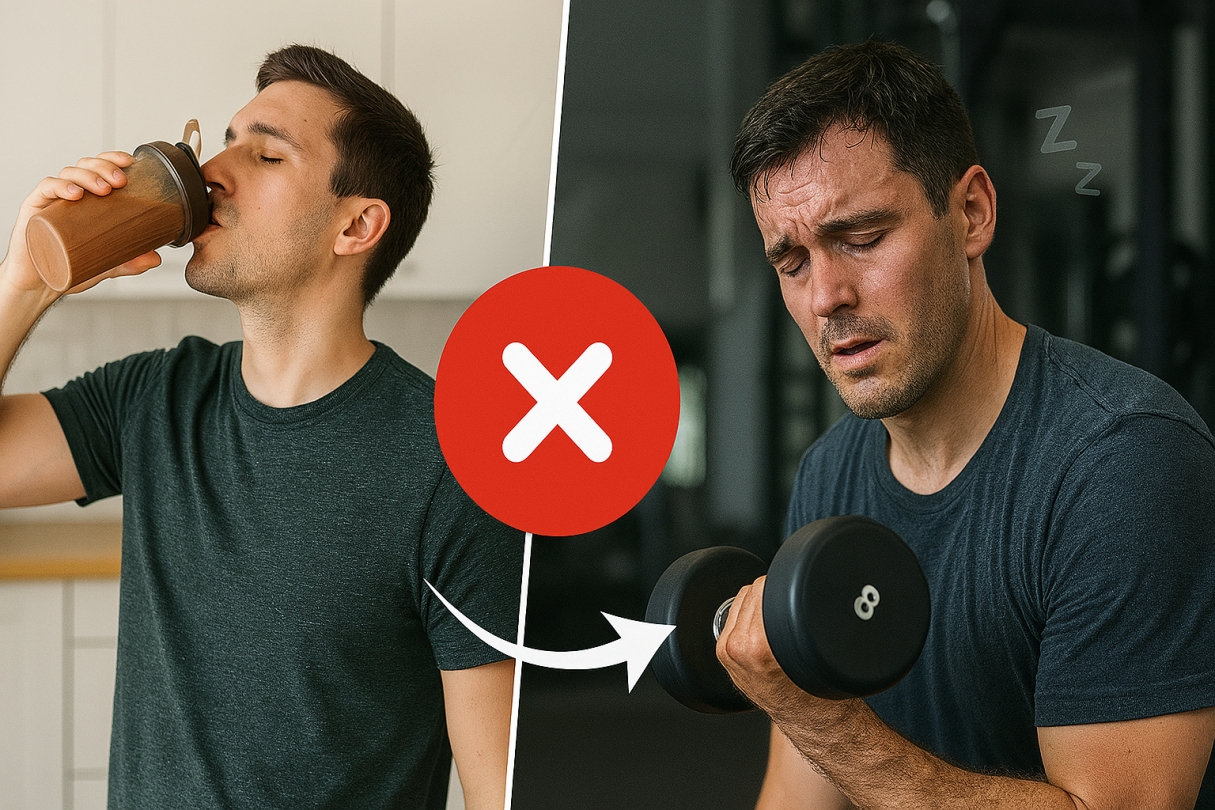
Drinking a whey protein shake right before a workout is one of the most common mistakes. When you haven’t eaten for a while, your body needs readily available energy. Of the three macronutrients—carbohydrates, fats, and proteins—protein is the least efficient at providing energy.
To be used as fuel, protein must be converted, which consumes energy. As a result, taking whey just before a workout is probably the worst choice. What you need is a quality source of carbohydrates like a banana, dates, or figs. If you're too hungry, you can add an apple or a handful of nuts to keep you full without feeling heavy.
Creatine cycles: an ineffective strategy
Many athletes still follow 'cycles' of creatine, often taken just before training. However, this supplement has no immediate effect. It’s not a stimulant like caffeine.
To experience its effects, your muscle stores of phosphocreatine need to be saturated. This is achieved by taking around 5 g daily, every day. Stopping intake reduces saturation and cancels out the benefits. Contrary to popular belief, there are no known risks to kidneys or testosterone when creatine is taken correctly.
In other words, taking breaks or forgetting to take it regularly makes creatine ineffective. It must be part of your routine, taken with your main meals.
Get your personalized program! 🎯
Stop wasting time with random exercises
Our coach creates a custom training program adapted to your goals, level, and available equipment. Get results faster with a structured plan designed just for you.
Omega-3s: beware of oxidation
The main issue with omega-3s isn’t how to take them, but how to store them. Once the bottle is opened, they must be kept in the refrigerator. Otherwise, they oxidize upon contact with oxygen and become not only ineffective but potentially toxic.
Even in capsule form, oxygen eventually seeps in, like air into a balloon or a tire. That’s why manufacturers add vitamin E to formulas: to slow down oxidation. But after a month, the bottle should be discarded.
Buying a bottle of 1,500 capsules is therefore pointless if you can’t use them within a month. It’s better to opt for 60 to 90 capsule formats or buy in bulk but divided into small containers to open gradually over time.
Conclusion
Dietary supplements can be effective, but only if used correctly. Avoid common mistakes: whey at the wrong time, pointless creatine cycles, and poor omega-3 storage. The key is consistency, proper timing, and good management.
Should you take whey protein before working out?
Should creatine be taken in cycles?
When should creatine be taken for it to be effective?
Can omega-3s be stored at room temperature?
Can you use a 1,500 capsule bottle of omega-3s?
Are all dietary supplements useful?
Is creatine dangerous for the kidneys or testosterone?
Should you take omega-3s if they’re oxidized?
Credits

Sources
- https://pubmed.ncbi.nlm.nih.gov/14600563
- https://www.ncbi.nlm.nih.gov/pmc/articles/PMC3407788
- https://www.nutrimuscle.com/blogs/actualites/indice-totox-omega-3
- https://youtu.be/QDmqb1r2M_A?si=drWTkm2JdEgsMWtz