TRX Low Row
Demonstration video

Recommended by our experts
Receive your personalized program
Stop training at random.
Get my program- Program tailored to your profile
- Guided progression
- Compatible with your equipment
- Structured plan
Our coach prepares your program
Get my programHow to do TRX Low Row
Instructions
- Adjust the TRX straps to mid-length and hold the handles with a neutral grip.
- Lean back with your body straight, feet flat on the floor, arms extended.
- Engage your core and pull your chest towards the handles by bending your elbows.
- Pause briefly at the top, squeezing your shoulder blades together.
- Lower yourself back to the starting position with control.
Technical Tips
- Keep your body in a straight line from head to heels.
- Avoid shrugging your shoulders; keep them down and back.
- Focus on retracting your shoulder blades before pulling with your arms.
Breathing Tips
- Inhale as you lower your body to the start position.
- Exhale as you pull your chest toward the handles.
Medical restrictions
- Shoulder impingement or rotator cuff injuries
- Severe lower back pain or disc issues
- Recent elbow or wrist surgery
Description
The TRX Low Row is an effective bodyweight exercise that targets the upper back and biceps while enhancing core stability and posture. Utilizing a suspension strap system like TRX, this movement leverages your body weight and gravity to deliver scalable resistance without the need for external weights. It is particularly beneficial for beginners and those looking to improve upper body pulling strength, making it a staple in functional training routines. By pulling your body toward the anchor point, the TRX Low Row engages muscles responsible for scapular retraction and elbow flexion, helping to correct posture imbalances caused by prolonged sitting. Additionally, the instability of the suspension system activates deep stabilizer muscles throughout the core, promoting better control and coordination. The TRX Low Row is a versatile and joint-friendly alternative to traditional rows, suitable for all fitness levels and adaptable across various training environments, including home gyms and rehabilitation settings.
Frequently asked questions
-
What muscles does the TRX Low Row work?
The TRX Low Row primarily targets the back and biceps, with secondary engagement of the lats, rhomboids, and forearm muscles, making it ideal for upper body pulling strength. -
Is the TRX Low Row suitable for beginners?
Yes, the TRX Low Row is beginner-friendly and easily adjustable by changing your body angle to control the resistance and difficulty level. -
Can I build muscle with TRX Low Rows?
Yes, consistent use of TRX Low Rows can contribute to muscle growth, particularly in the back and arms, by progressively increasing volume and intensity. -
How is the TRX Low Row different from the inverted row?
While both exercises use bodyweight pulling mechanics, the TRX Low Row uses suspension straps for added instability, enhancing core activation and control. -
Is the TRX Low Row good for posture improvement?
Absolutely. The TRX Low Row strengthens the upper back and scapular retractors, which are essential for maintaining proper posture and countering slouching.
Variants and alternatives
See all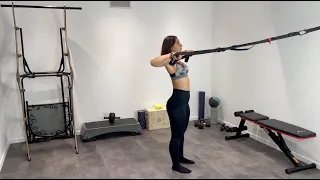
Trx rear delt row
Intermediate
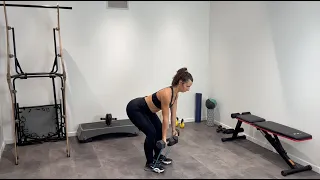
Banded supination row with dumbbells
Intermediate
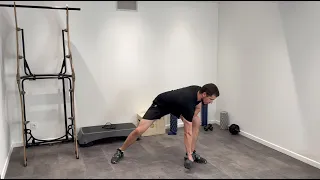
Side lunge dumbbell row with supination
Intermediate
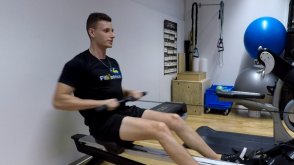
Rowing machine
Beginner
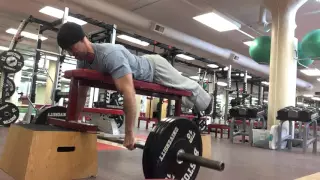
Lying barbell row
Intermediate
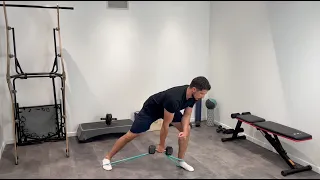
Banded chainsaw dumbbell row
Intermediate
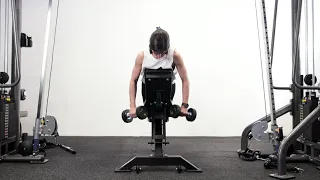
Dumbbell incline row
Intermediate
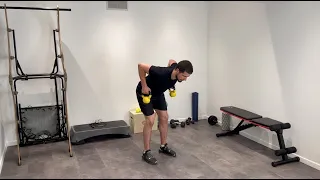
Kettlebell neutral row
Intermediate
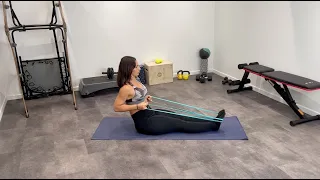
Seated banded rows
Beginner
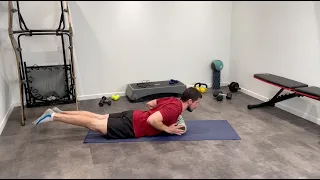
Prone pillow case row
Beginner
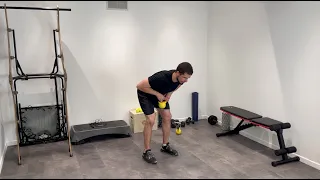
Single kettlebell pronation row
Intermediate

Single arm banded low row
Beginner
Related fitness articles
See all
Shoulder pain in weight training: prevention and solutions
Risk of injuries

What is the best training structure?
Muscle gain

Lose weight fast: effective and safe methods
Diet

Dietary supplements: what should you know?
Health

Cardio and strength training: how to avoid interference
Weight loss
Supplements taken wrong: mistakes that cancel their effects
Dietary supplements

High-calorie foods: why choose them?
Muscle gain
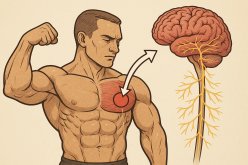
Mind-muscle connection: the key to effective training
Muscle gain
Recommended by our experts
Receive your personalized program
Stop training at random.
Get my program- Program tailored to your profile
- Guided progression
- Compatible with your equipment
- Structured plan
Our coach prepares your program
Get my program