Kettlebell Overhead Carry
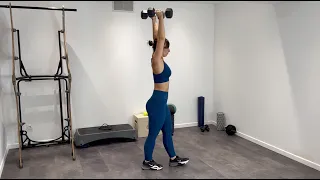
Demonstration video

Recommended by our experts
Receive your personalized program
Stop training at random.
Get my program- Program tailored to your profile
- Guided progression
- Compatible with your equipment
- Structured plan
Our coach prepares your program
Get my programHow to do Kettlebell Overhead Carry
Instructions
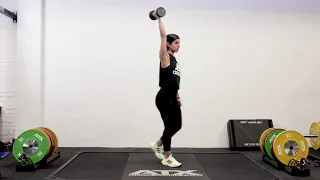
- Stand tall holding a kettlebell overhead with one arm fully extended.
- Engage your core and keep your ribs down and spine neutral.
- Begin walking forward slowly and under control.
- Maintain the kettlebell in a stable overhead position throughout the walk.
- Switch arms after the prescribed time or distance is completed.
Technical Tips
- Avoid arching your lower back—brace your core throughout.
- Keep your wrist neutral and stacked over the shoulder.
- Walk with short, controlled steps to maintain balance.
- Do not allow the kettlebell to drift forward or outward.
Breathing Tips
- Inhale before initiating the walk.
- Exhale steadily as you walk, maintaining intra-abdominal pressure.
- Avoid holding your breath for too long; breathe rhythmically and controlled.
Medical restrictions
- Shoulder instability or recent shoulder injury
- Lower back pain or spinal compression issues
- Vestibular or balance disorders
Description
The Kettlebell Single Arm Overhead Walk, also known as the Kettlebell Overhead Carry, is a functional, full-body exercise that improves shoulder stability, core strength, and postural control. In this movement, the lifter holds a kettlebell overhead with one arm fully extended while walking a controlled distance. This exercise challenges the stabilizing muscles of the shoulder and engages the entire core, including the obliques and spinal erectors, to maintain an upright posture. Because of its unilateral nature, it also helps correct muscular imbalances and enhances coordination. The overhead position requires thoracic mobility and reinforces scapular stability, making it ideal for athletes and individuals aiming to improve overhead performance or injury resilience. The Kettlebell Single Arm Overhead Walk is commonly used in strength training, CrossFit, and rehab settings for developing strength under dynamic conditions. It is best suited for intermediate lifters who have adequate shoulder mobility and trunk control, and it can be progressed by increasing time, distance, or kettlebell weight.
Frequently asked questions
-
What muscles does the Kettlebell Overhead Walk work?
The Kettlebell Overhead Walk primarily targets the shoulders, core, and upper back muscles while also engaging the glutes and stabilizers for posture and balance. -
Is the Kettlebell Single Arm Overhead Walk good for core strength?
Yes, this exercise is highly effective for core strength because it forces the trunk muscles, especially the obliques and spinal stabilizers, to work against asymmetrical loading during movement. -
Can I do the Kettlebell Overhead Carry with shoulder issues?
It is not recommended to perform overhead carries if you have shoulder instability or pain. Consult a medical professional before attempting this movement. -
How heavy should the kettlebell be for overhead walks?
Choose a kettlebell weight that allows you to maintain proper form and shoulder stability without compensation. Start lighter and progress gradually. -
What are the benefits of walking with a kettlebell overhead?
Walking with a kettlebell overhead improves shoulder stability, core engagement, postural control, and dynamic balance, making it a valuable addition to functional training.
Related fitness articles
See all
Shoulder pain in weight training: prevention and solutions
Risk of injuries

What is the best training structure?
Muscle gain

Lose weight fast: effective and safe methods
Diet

Dietary supplements: what should you know?
Health

Cardio and strength training: how to avoid interference
Weight loss

Supplements taken wrong: mistakes that cancel their effects
Dietary supplements

High-calorie foods: why choose them?
Muscle gain
Mind-muscle connection: the key to effective training
Muscle gain
Recommended by our experts
Receive your personalized program
Stop training at random.
Get my program- Program tailored to your profile
- Guided progression
- Compatible with your equipment
- Structured plan
Our coach prepares your program
Get my program